
The Four Pillars
How a Book, a Partnership, and Sixteen Years of Patience Built Frontieras North America
By Matthew McKean, Chief Executive Officer & Co-Founder • Frontieras North America
In the summer of 2009, I read a book that changed how I think about building companies.
Aftershock, by economists Robert and David Wiedemer, was a book about bubbles. Most people read it for the financial predictions. I read it for something else entirely: a framework the Wiedemer brothers laid out for understanding how major technologies achieve lasting, society-level impact. They called it S.T.E.P. Science. Technology. Economics. Politics. Four independent pillars, each one necessary, none sufficient alone. Their argument was that transformational innovations don’t fail because the science is wrong or the engineering is bad. They fail because the pillars don’t align. You can have brilliant technology that dies in hostile economics. You can have favorable economics that stall under hostile politics. The Wiedemers’ insight was structural: you have to account for all four, and you have to accept that you don’t control the timing on all of them.
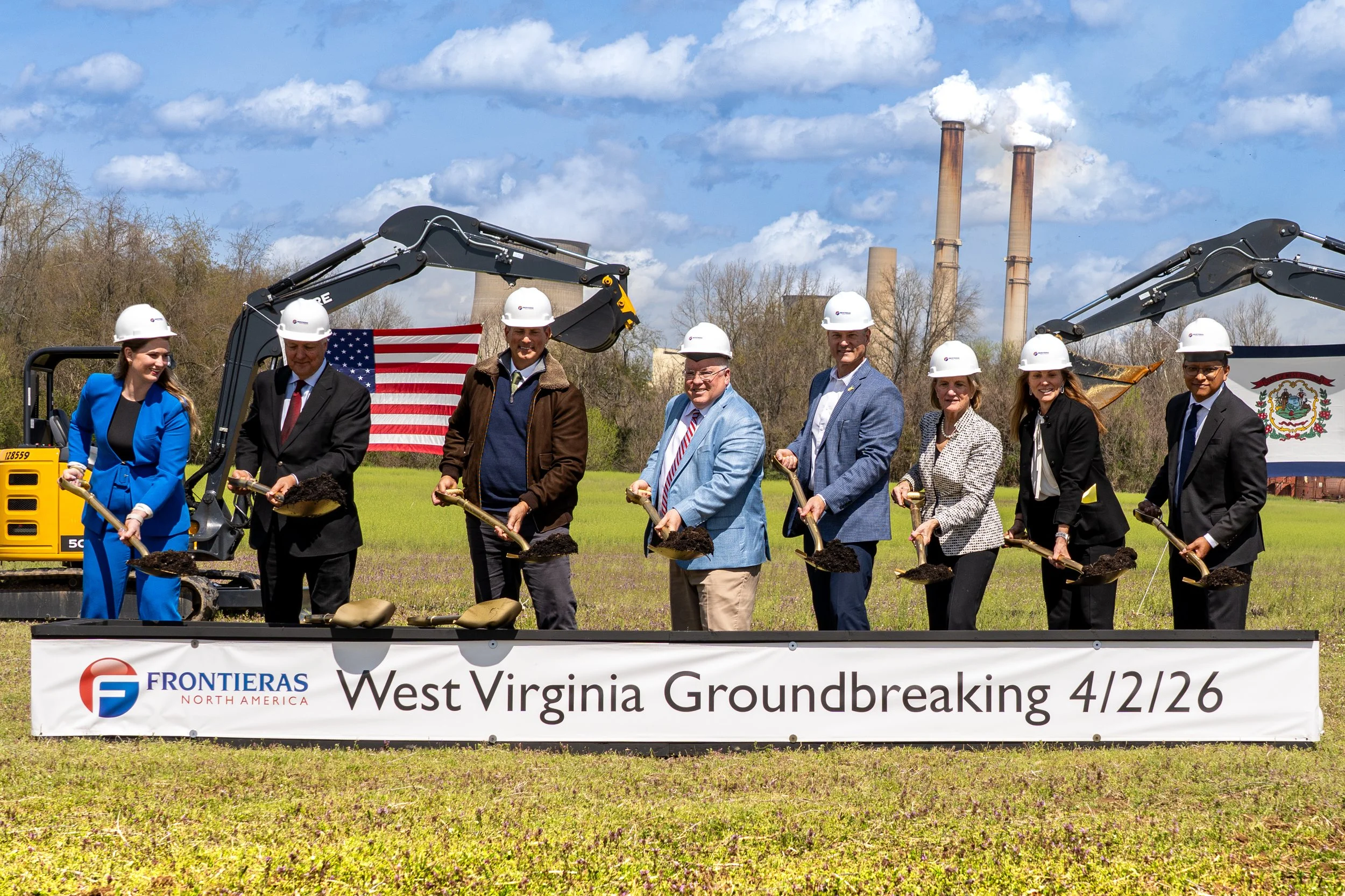
I wrote that framework into the original business plan for Frontier Applied Sciences. That was 2010. Sixteen years later, on April 2, 2026, we broke ground on an $850 million commercial facility in Mason County, West Virginia, with the Governor, a United States Senator, the Secretary of State, and the President of the West Virginia Coal Association standing beside us.
Every major decision this company has made traces back to those four pillars. This is the story of how they came together.
The Meeting
I met Joe Witherspoon in the summer of 2010. Joe is a licensed Professional Engineer with a degree in Chemical and Fuels Engineering from the University of Utah and decades of engineering, design and operational experience inside the industrial plants where hydrocarbons are actually processed: Chevron, Enterprise Products, Sinclair Oil, Marathon Petroleum. He had spent his career refining and reforming fossil fuels at scale, and he had developed something I had never seen before. A process for thermally fractionating coal into multiple high-value products without burning it.
Not coal-to-liquids. Not gasification. Not combustion with bolt-on scrubbers. Joe had designed a closed-loop, continuous-flow system that disassembles coal at the molecular level in a reducing atmosphere and captures every output. The original FASForm™ design produced four known product streams: naphtha, kerosene, diesel, and a purified coke product that would become what we now call FASCarbon™. We theorized there would be additional outputs on the gas side, potentially propane, butane and other hydrocarbon gases, but we would not know the gas composition or the water-side products until we could build and run a test unit.
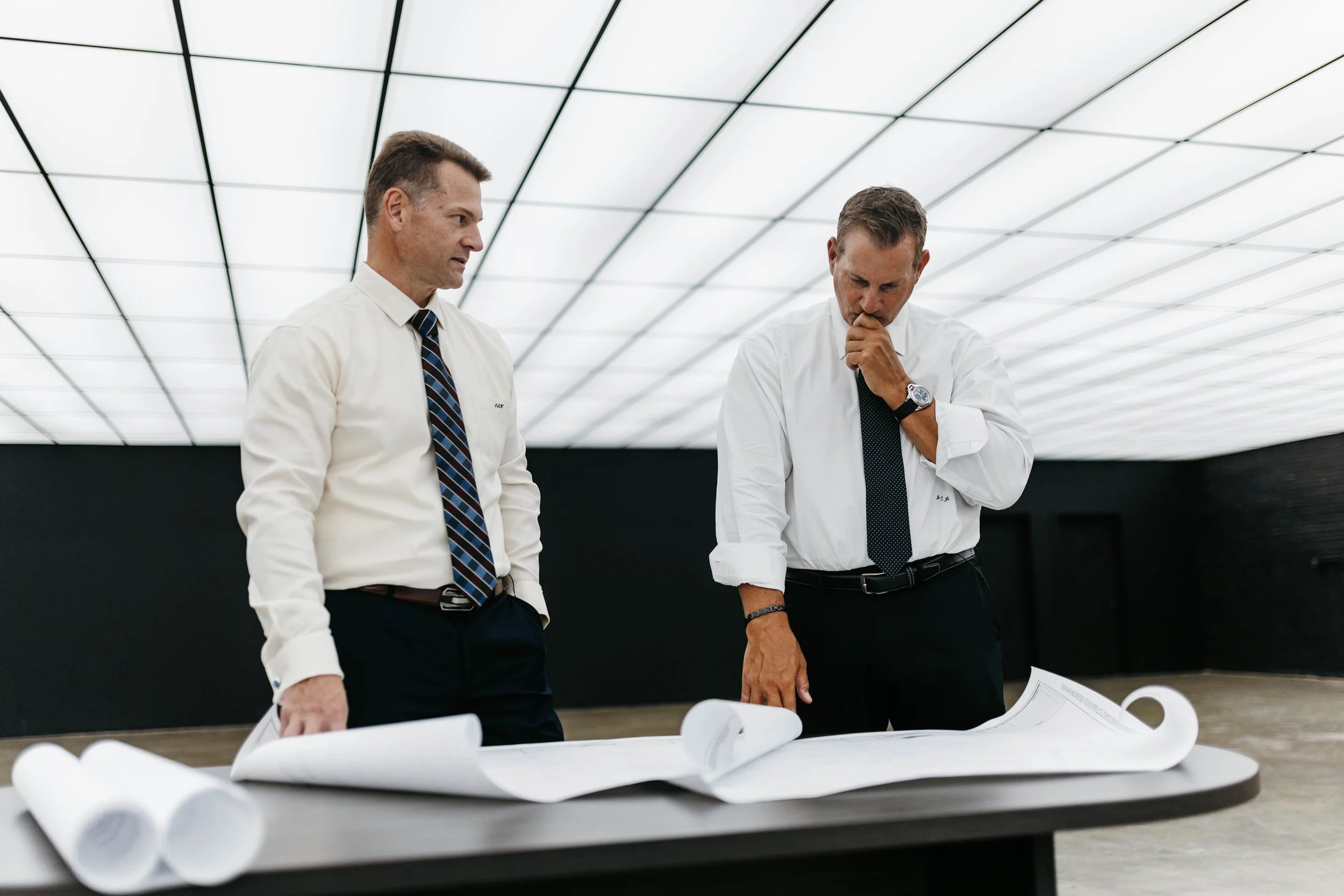
Joe is the inventor. He is the reason this company exists.
We filed a US provisional patent that year. In January 2011, we formally launched Frontier Applied Sciences and filed the international PCT patent declaration, initiating protection across up to 153 countries. The first pillar, Science, was established. The underlying chemistry of hydrocarbon fractionation was sound, validated by decades of refining science and by Joe’s engineering. The second pillar, Technology, had a working design and a patent claim. But we knew, even then, that two pillars were not enough.
Building In The Dark
The political environment in 2010 and 2011 was, to put it plainly, the worst possible moment to be building a coal-based technology company.
Barack Obama had told the San Francisco Chronicle’s editorial board in January 2008 that under his energy plan, anyone who wanted to build a coal-fired power plant could do so, but it would bankrupt them. He was not speaking theoretically. The EPA promulgated the Clean Power Plan, tightened Mercury and Air Toxics Standards, and pursued a regulatory architecture explicitly designed to make coal economically unviable. Between 2008 and 2016, more than 400 coal mines closed and more than 300 coal-fired power plants shuttered. 83,000 coal jobs disappeared. Peabody Energy, the world’s largest private coal company, filed for bankruptcy. The President of the United States was not quietly discouraging coal. He was publicly celebrating its decline.
This is the environment in which Joe and I spent seven years building FASForm™.
We could not raise commercial capital. No serious institutional investor was going to fund a coal-utilization technology when the sitting administration was promising to bankrupt the industry it depended on. The S.T.E.P. framework told us exactly why: the Science was valid, the Technology was advancing, the Economics were modeled, but the Politics were hostile. Three pillars standing. One missing. And the missing pillar was the one we could not control.
So we built what we could control. And we funded it ourselves.
From 2010 through mid-2017, every dollar spent on Frontier Applied Sciences came from Joe Witherspoon and me personally. Every patent filing. Every legal fee. Every hour of engineering. Every piece of fabricated equipment. The company was not ready for outside investment, and the political climate would not have supported a raise even if it had been. So we wrote the checks ourselves and kept building.
Scarcity As A Teacher
Limited capital forced us to be resourceful in ways that ultimately made the company stronger.
We could not hire large patent firms to prosecute our intellectual property, so we did it ourselves. Joe wrote the entire patent specification (detailed description), every technical claim in the patent and produced every process diagram. I wrote the historical and contextual background narrative. Our patent attorney helped assemble the filings into submittable format and guided the process, but the substance of the work was ours. When the patent office issued actions, Joe answered them, technically and in detail. He did this not once, but across nine countries on five continents, building a global IP portfolio that would eventually cover approximately 85% of the world’s coal production and half the world’s population. That is not how patent portfolios normally get built. We built it that way because we had no other option.
The same constraint applied everywhere. We could not hire consultants to study the coal markets, so we studied them ourselves. We became deeply knowledgeable about coal chemistry, natural gas economics, power generation, global commodity pricing, and the regulatory frameworks governing energy production across multiple continents. We did not acquire this knowledge because someone told us to. We acquired it because limited capital left no alternative. Every question that needed an answer, we had to answer ourselves.
When we needed to validate the technology, we faced the same choice. We considered partnering with universities and research centers in Texas. We explored those options and discovered they would charge far more than we could afford. More importantly, they did not have the expertise to understand our technology. We would have been teaching FASForm to outsiders while trying to validate it, effectively handing over proprietary knowledge during the most sensitive phase of development. So Joe designed our process demonstration unit, which I call Alfred. Joe had the overall framework and key components fabricated and procured all other equipment and instrumentation and installed it, himself. I was there and helped with my own two hands. And we built our own test unit.
We found a remote location on unincorporated land near College Station, Texas, about an hour and a half from Houston. And then, during COVID, while the rest of the world was locked down, Joe and I traveled back and forth from our homes in Arizona and Utah to run our tests. Privately. Without prying eyes. Hidden away from the world for a year. That is as close to a literal skunkworks as it gets: two founders, a test unit, and empty Texas land.
Alfred confirmed what Joe’s engineering had predicted: the liquid and solid product yields were real. It also answered the questions we could not answer on paper. We now knew the full gas, oil and water streams composition, including hydrogen and methane produced by the process, which would be consumed onsite to provide thermal heat and refining capability for hydrotreating our liquid fuels to finished specifications. We had the empirical basis for a complete product and energy profile, independently validated by laboratory analysis. The technology was no longer theoretical.
By 2018, we held US Patent No. 9,926,492 and a global intellectual property portfolio spanning five continents. Over 60,000 man-hours had been invested in technology development and validation. Seven years. No fanfare. No press releases. No stage. Just the work.
What The Delays Built
“When nothing seems to help, I go and look at a stonecutter hammering away at his rock, perhaps a hundred times without as much as a crack showing in it. Yet at the hundred and first blow it will split in two, and I know it was not that last blow that did it, but all that had gone before.”
The patent years were the stonecutting years. But what most people don’t realize is that the forced pause didn’t just preserve the technology. It improved it.
While the capital markets were closed to coal innovation, Joe Witherspoon kept engineering. He didn’t sit idle waiting for the politics to change. He went deeper into the process chemistry. He and our team re-engineered, modified, optimized, and expanded the original FASForm plant design. What emerged from those years of continued development was not the same technology we had patented.
Joe developed a method for recovering sulfur from the process byproducts to make sulfuric acid, turning what would have been a waste stream into an industrial chemical product. Then he went further. In 2024, he invented what we now call the Witherspoon Method: a process for converting the ammonia byproducts into ammonium sulfate fertilizer at production costs significantly below conventional methods. The company has filed international patent claims for the Witherspoon Method, which is currently patent pending.
The original FASForm design produced four known product streams. The FASForm that breaks ground in Mason County in 2026 produces six: diesel, naphtha, kerosene, purified solid carbon, sulfuric acid, and ammonium sulfate fertilizer. Every additional revenue stream that Joe engineered during the delay period makes the plant more profitable, more resilient, and more valuable. The zero-waste profile that defines Frontieras today did not exist in the original patent. It was built, one innovation at a time, during the years when the world told us coal had no future.
The political headwinds didn’t just delay us. They made us better.
The Economics Had To Stand Alone
There was a reason we built FASForm’s financial model to operate without a single dollar of government subsidy, and it was not ideological purity. It was strategic.
If you studied the S.T.E.P. framework honestly, you understood that the Politics pillar was volatile. Administrations change. Subsidies expire. Tax credits get repealed. Any technology whose economics depend on political favor is one election cycle away from irrelevance. We watched this happen to companies that thrived under favorable policy and collapsed when the credits dried up. We watched it happen to clean coal demonstration projects that burned through federal grants and produced nothing that could survive in an open market.
FASForm had to be profitable on its own terms. The structural advantage was there from the beginning: coal as a feedstock costs $2–3 per million BTUs compared to $3–15 for oil and natural gas. The United States holds approximately 249.8 billion short tons of recoverable coal reserves, the largest in the world, enough to sustain production for over 250 years at current rates. The feedstock was cheap, abundant, and domestic. The outputs, now six distinct product streams, sell into global commodity markets at prices set by supply and demand, not by regulation.
Alfred’s 12-month test run near College Station produced independently validated results. We completed FEL 1 and FEL 2 engineering. We had our products tested by the world’s largest testing laboratory, providing clarity as to what our products were and how they could be marketed.
The third pillar was standing. FASForm was engineered to be profitable at conservative commodity pricing, with no reliance on credits, mandates, or political goodwill. If the politics never turned, the economics would still work. That was the design.
The Final Pillar
And then the politics turned.
The ESG mandates that had dominated institutional capital allocation for a decade collapsed under the weight of their own contradictions. European deindustrialization accelerated as energy costs soared. AI and data center demand created an electricity consumption surge that wind and solar could not serve at scale. The Department of Energy projected data centers would reach 6.7 to 12 percent of total US electricity demand by 2028. The IEA projected natural gas and coal would supply over 40% of the incremental power required.
West Virginia passed the Advanced Baseload Act, creating a 20% investment tax credit for 20 years for new baseload energy facilities. The state enacted expedited permitting with 45-day certification windows. The Governor committed $4.2 billion under the “50 by 50 Plan.” The federal government allocated $175 million in DOE Modernization Grants.
In 2021, we established Frontieras North America as the commercial vehicle for FASForm’s deployment in the United States and Canada. In January 2026, we closed on 183 acres in Mason County, West Virginia. On April 2, 2026, Governor Patrick Morrisey, Senator Shelley Moore Capito, Secretary of State Kris Warner, and West Virginia Coal Association President Chris Hamilton joined us at the groundbreaking ceremony for the first commercial FASForm™ facility.
The fourth pillar was in place.
I said something at that ceremony that I had been thinking about for sixteen years: We are not just breaking ground on a project. We are breaking ground on an industry.
I meant it. FASForm is not a single plant. It is a platform. FASGEN™, our co-location technology, is designed to integrate with the more than 200 existing coal-fired power plants operating across the United States, converting them from single-output combustion facilities into multi-product energy hubs. The Mason County facility is the first proof point. The coal fleet modernization is the horizon.
What Patience Earns
Robert and David Wiedemer wrote a framework about economic forces and the conditions required for transformational change. I took that framework and applied it to the most fundamental industry on earth. Science, Technology, Economics, and Politics. You need all four. You cannot rush the ones you don’t control. And you must not stop building the ones you do.
Joe Witherspoon and I have been partners since 2010. We have spent sixteen years building a patented, validated, globally protected, zero-waste technology platform that converts America’s most abundant energy resource into the fuels, chemicals, fertilizers, and materials that civilization runs on. We built the science. We proved the technology. We engineered the economics to stand without subsidy. And we waited, with discipline, for the politics to arrive.
They arrived. Now we build.
Abundant, affordable, and available energy for all.
Matthew McKean
CEO & Co-Founder, Frontieras North America