
The Man Who Built Wyoming's Most Profitable Refinery Is Running Our Mason County Plant
By Frontieras North America
When Frontieras broke ground in Mason County on April 2nd, the focus shifted from whether this technology works to who's going to run it. Construction is underway and preliminary construction has begun on 184 acres on the Ohio River. What comes next is the hardest part of any industrial project: commissioning a facility that has never been built before and building the team to operate it.
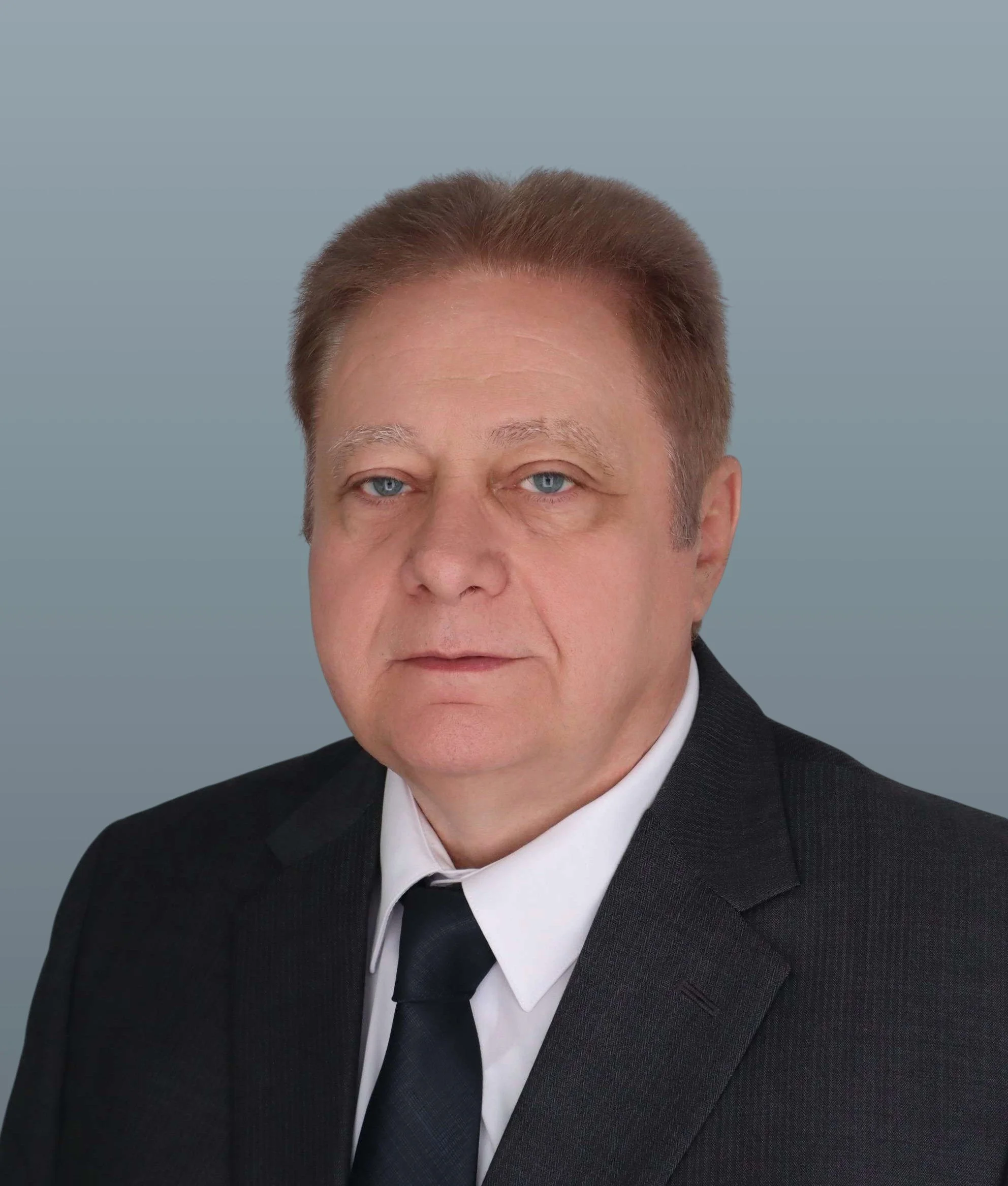
We’re thrilled to announce Robert Portz as that person, our new Vice President, Operations & Engineering and Mason County Plant Manager.
West Virginia in His Bones
Charleston’s identity, when Bob was growing up, was inseparable from coal and chemicals. Union Carbide sat on its own island just outside of town. His wife’s entire family was tied to the coal industry in one way or another, be it mines, trucks, or the businesses that supplied them.
“The chemical industry, the energy industry—in Charleston, it was all centered around coal,” he told me. “All discussions were around coal, trucking, barging, coal mining.”
He grew up hunting, fishing, and boating on the Kanawha River and Summersville Lake. He knows that part of the country the way you only know a place when it’s in your bones. And even after thirty years of moves across the country, it never fully let him go.
“Once you’re born and raised in Appalachia,” he mused, “it never leaves your blood.”
Thirty Years in the Refineries
Bob’s career began at Ashland Oil’s Catlettsburg, Kentucky refinery, one of the largest inland refineries in the country, where he started as a technician before the company offered to pay for his chemical engineering degree at Ohio University. He graduated with a 4.0 GPA from WV State College and completed his bachelor’s in chemical engineering cum laude, while working full-time at the refinery
Over fifteen years at Ashland (which became Marathon Ashland Petroleum and eventually Marathon), he worked across the full range of process units: residue catalytic cracking, FCC, alkylation, lube processing for Valvoline production, and specialty chemicals. When the facility was locked down during a labor strike, he ran the alkylation unit as an operator. He became a technical services engineer supporting multiple units across the facility.
Eventually, he left to grow his skills. At Hunt Refining in Alabama, he moved into senior process engineering and took on something new: running the refinery’s LP model. That’s the tool that treats an entire refinery as a single integrated system—what crude to buy, how to run each unit, what products to produce, how to set the production budget. “Each individual process unit is brought into the conversion window as the oil flows through unit by unit,” he explained. “But basically, I was looking at the refinery as a full integrated facility.”
Then came Sinclair Oil—first at the corporate level running LP models for the Tulsa refinery, then on-site in Sinclair, Wyoming as Technical Services Manager. He digitized operations that had been running on paper for decades. He supported capacity expansion for sour crude handling. He rebuilt the institutional knowledge of a refinery that had been bleeding it when people left.
And then Wyoming Renewable Diesel Corp.
Sinclair built a renewable diesel operation alongside the refinery. The first year it ran, it made more money than the refinery itself. The person who had built it retired, and Bob took on the role. “I have a lot of respect for taking something from the ground up,” he said. That experience is exactly the mindset we need for Mason County.
He spent the subsequent years as Technical Manager at PBF Energy’s Toledo Refinery, overseeing process engineers, process design, capital projects, the DCS group, and laboratory functions. He was back in the Appalachian corridor. Close to home.
What He Saw in Joe Witherspoon
Bob and Joe Witherspoon first met at Sinclair Oil, where their work overlapped in refinery engineering and planning. They worked together on projects for roughly six years—long enough to play golf after work, talk through improvements, and build the kind of professional respect that goes beyond titles.
When Bob moved to PBF Energy’s Toledo Refinery, he called Joe in spring 2024 about a capital project that wasn’t progressing the way it needed to. Joe made time, even though he didn’t exactly have any. It was in that conversation that he told Bob what he’d been building.
“That’s when he told me about FASForm and the technology,” Bob said. “What he and a small group had been working on. I found it very interesting.”
Bob had spent his career in conventional refining. He knew what it took to make a process work at scale. When Joe described taking coal, heating it in a controlled environment, and extracting liquid and gas streams that could be recovered into finished products, Bob understood exactly what he was looking at.
“The chemistry made sense to me immediately. You’re taking the coal, heating it up in a controlled environment, and extracting liquids. Then you’re taking the gases and streams and recovering them into a finished product that has value. That’s not a concept. That’s an engineering problem.”
He’s been asked what he tells skeptics. His answer is the same one he gave when people said renewable diesel couldn’t be done affordably, or at all.
“The technology is real, and you’ll see it very soon in West Virginia. People don’t understand the technology, so they think it can’t be done. Once we start doing it, there will be a lot of people who want to come visit.”
Bob didn’t just study FASForm™ in the two years between that first conversation and coming on board. He invested in it, becoming a private investor in Frontieras’ first offering before he ever considered joining as a leader.
Why He Said Yes
His professional network was surprised. He’s established, credentialed, comfortable in the world of American refining. Why change gears?
“It’s only half the gears,” he said. “There are a lot of processes involved in this. It’s new and existing, and I think I’m just the right person to blend those together.”
He drove down to Mason County for the April 2nd groundbreaking. He was impressed with how the day was organized, how the local politicians and high school students and community members were treated, how the message was delivered.
“How everyone was treated, how it was presented, how the message was delivered...it was all very professional,” he said. “It was exciting to hear the conversations about the technology, and how it will change the energy front. The whole presence of how it will impact the area and the people was very exciting.”
That day got him more excited about the role.
What He’s Going to Build
In practical terms, Bob’s job right now is making sure that every engineering firm working on this plant is applying sound principles and practices in their design packages. When those packages move into construction, his job becomes making sure the work is done systematically, that the resources are working together and nothing falls through the cracks.
And beyond construction: building the team that runs the plant.
“My role will also be to help get people hired on to run the facility and make sure there’s proper training,” he said. “Making sure we get the right talent and the right people, and we can get them trained and prepared to operate the facility once it’s up and running. The goal is always to make sure no one gets hurt and that we are environmental stewards of the facility and working together as one team.”
He’s already thinking about what a great day looks like when the plant is commissioned and running: reviewing yield reports, making sure everything coming in and going out is as planned, looking for ways to improve performance even when things are running well. “Even if it’s running well, the question is: what can we do to make it run better?”
On what it means to be bringing this work back to West Virginia, Bob doesn’t reach for abstractions. “Everyone there enjoys working, enjoys doing their job, making an honest day’s pay for an honest day’s work,” he said. “Bringing more stability and quality of life, I think everyone will be happy. I know I’m excited.”
The energy industry isn’t short on people who can manage what already exists. But what we’re doing in Mason County doesn’t have a playbook. It requires someone who has built new things before, who knows the difference between a technology that’s been sold and a technology that works, and who has the credibility in the industry to build the team around him.
Bob Portz has spent over thirty years earning that credibility. He knows what Joe Witherspoon built. And he came home to West Virginia to prove it works.
At Frontieras, abundant, affordable, and available energy isn’t a slogan. It’s the engineering problem we face every day. We’re grateful to have the right person running it.